


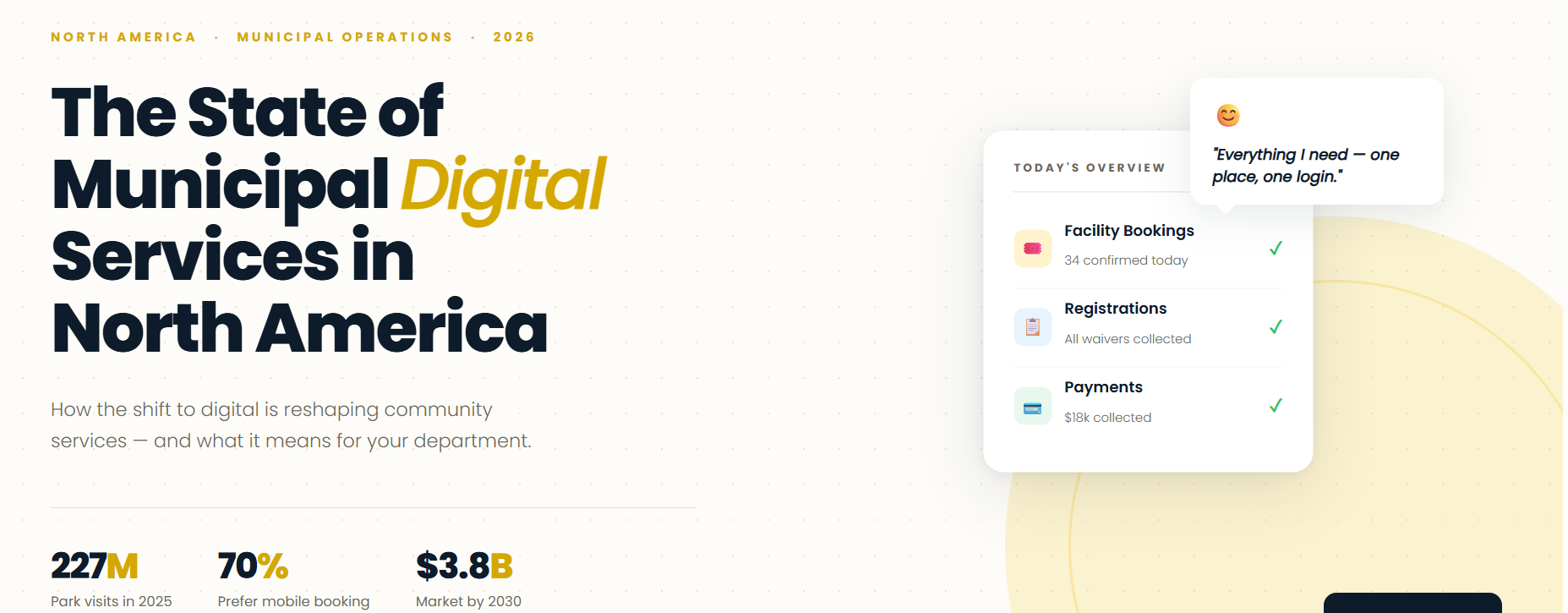
Walk into almost any Parks & Recreation office in North America and you’ll find the same scene: a phone that hasn’t stopped ringing since 9am, a stack of paper registration forms waiting to be entered into a spreadsheet, and a staff member doing their third manual booking confirmation of the morning.
Meanwhile, the community outside expects to do all of this from their phone, before breakfast.
The gap between what residents expect and what most municipal departments currently deliver has never been wider. This is a clear-eyed look at where North American municipal digital services actually stand right now and what the departments getting it right are doing differently.
The Numbers Tell an Honest Story
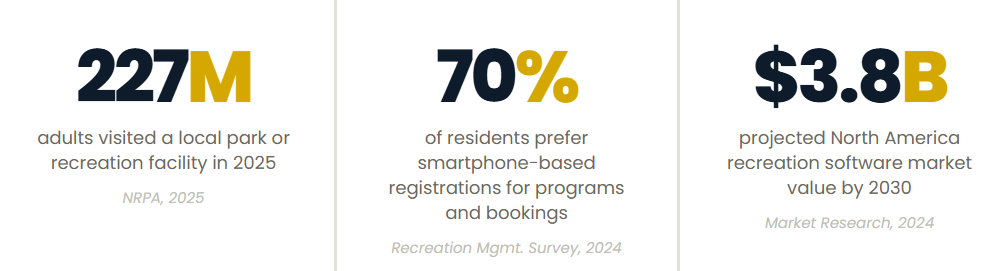
An estimated 227 million adults or a household member visited their local park or recreation facility in 2025. That’s a staggering volume of community interactions. And yet, for most departments, the administrative back end supporting those interactions is still largely manual.
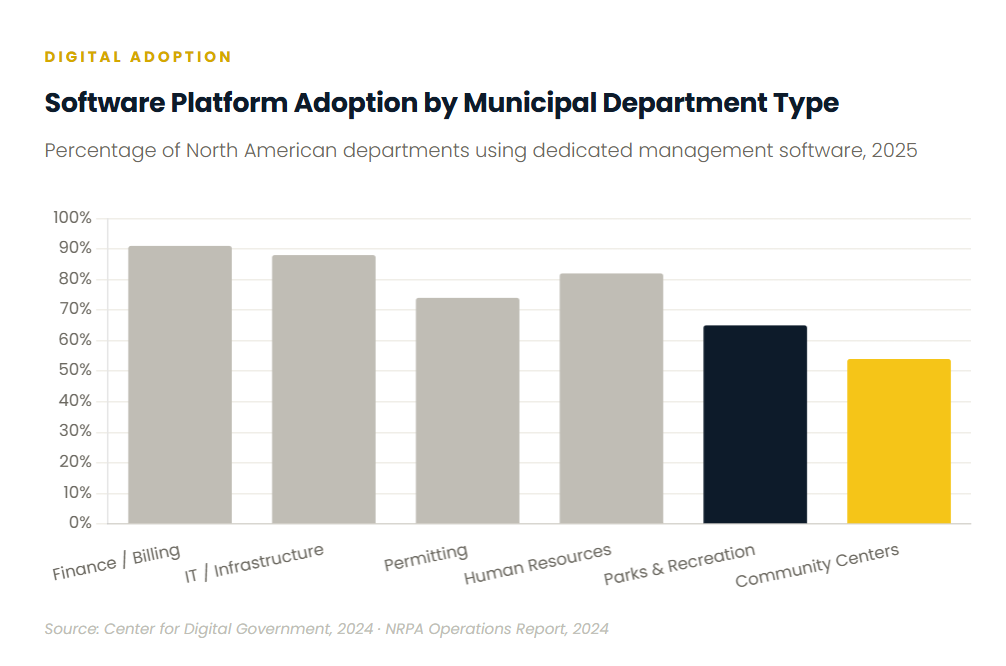
More than 65% of U.S. municipalities have already deployed some form of recreation management platform, yet significant opportunities remain in small and mid-sized towns still using manual systems. A large portion of North American Parks & Rec departments are still running on spreadsheets, paper permits, and phone-based bookings in 2026.
What Residents Are Actually Expecting
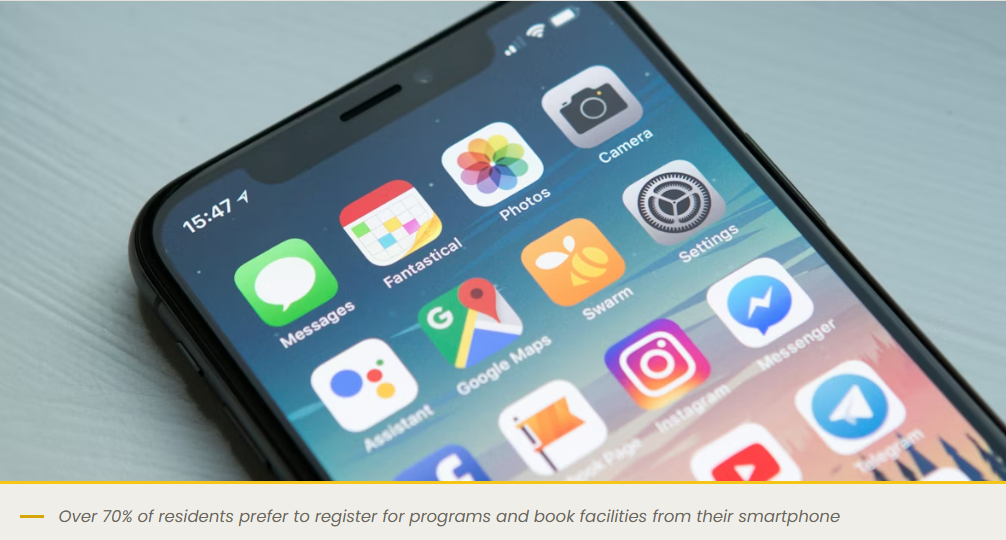
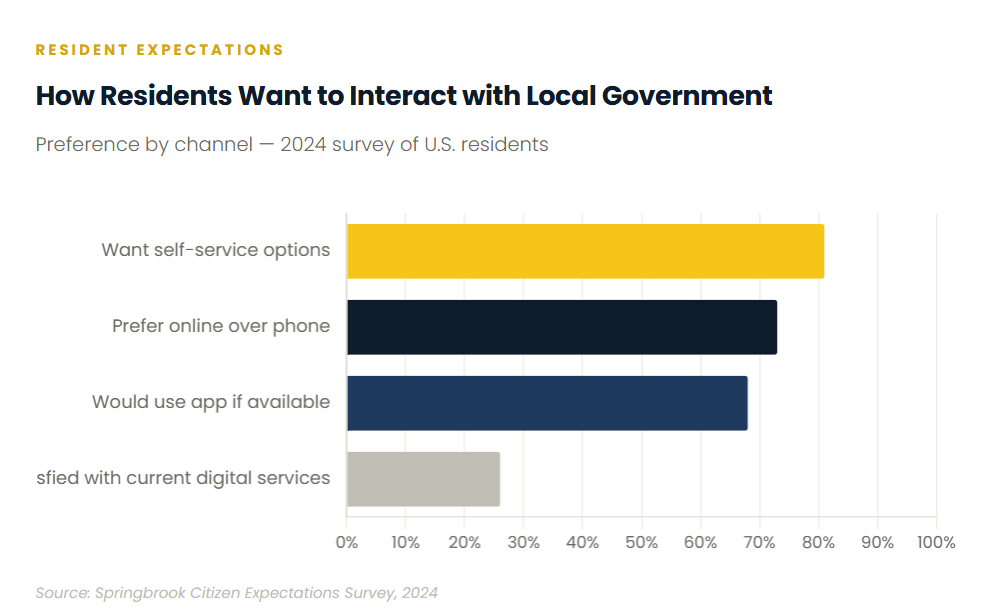
Over 70% of residents now prefer smartphone-based registrations for recreation programs and facility bookings. They’re not asking for a better phone experience, they’re asking to skip the phone entirely.
Residents who can book a restaurant, pay a utility bill, and schedule a medical appointment from their phone in under five minutes are not going to wait on hold to reserve a community center room. When they can’t complete transactions online, they either give up or they call your already-stretched team.
“81% of residents say they prefer to resolve most issues on their own and want more self-service options from their local government.”
The Real Cost of Manual Operations
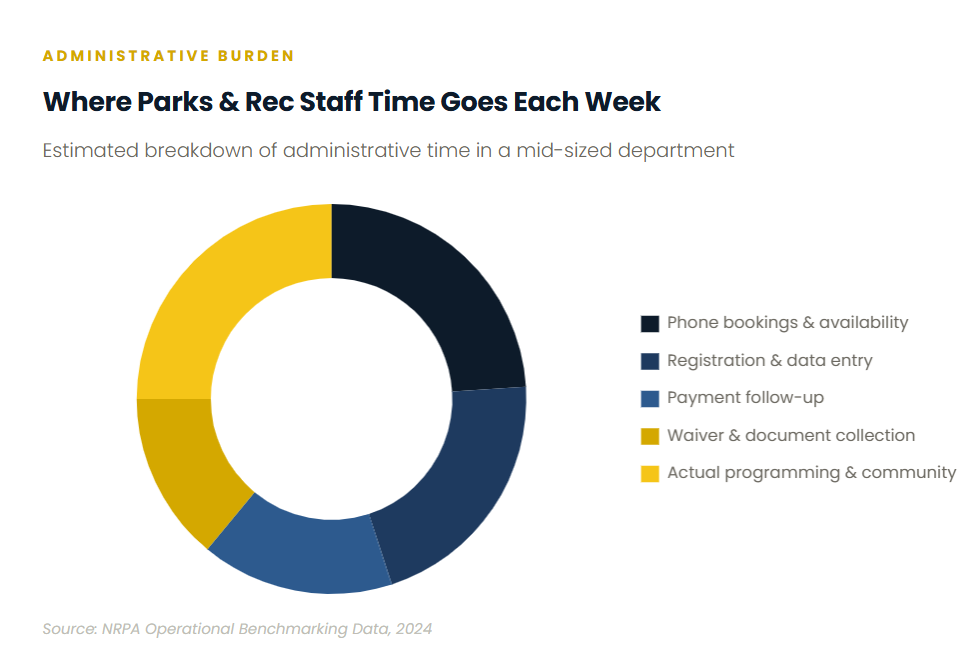
Consider what a typical department handles manually every week: facility bookings over the phone, availability checks, payment collection, program registrations, waiver collection, waitlist management, and seasonal scheduling. Each is a process that can be systematized, but in most departments, it isn’t.
A 2024 pilot at a major U.S. Park district found that digital recreation management reduced booking errors by 28% and administrative overhead by 22% – representing real hours returned to staff and real accuracy gains where double-bookings and missed payments have direct community impact.
The Shift Toward Integrated Operations
The departments making the biggest gains aren’t just digitizing individual tasks – they’re moving toward integrated platforms that connect the full workflow: scheduling, registration, payments, compliance, and reporting, all in one system.
Integration is also a staff retention issue. A team spending its days doing work that software should be handling is a team that burns out and is harder to replace.
The Budget Opportunity
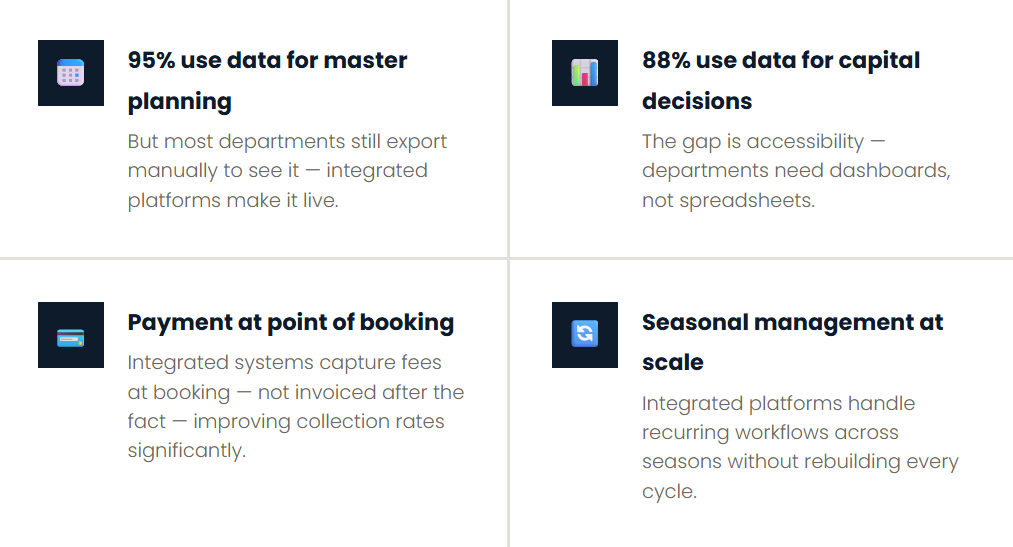
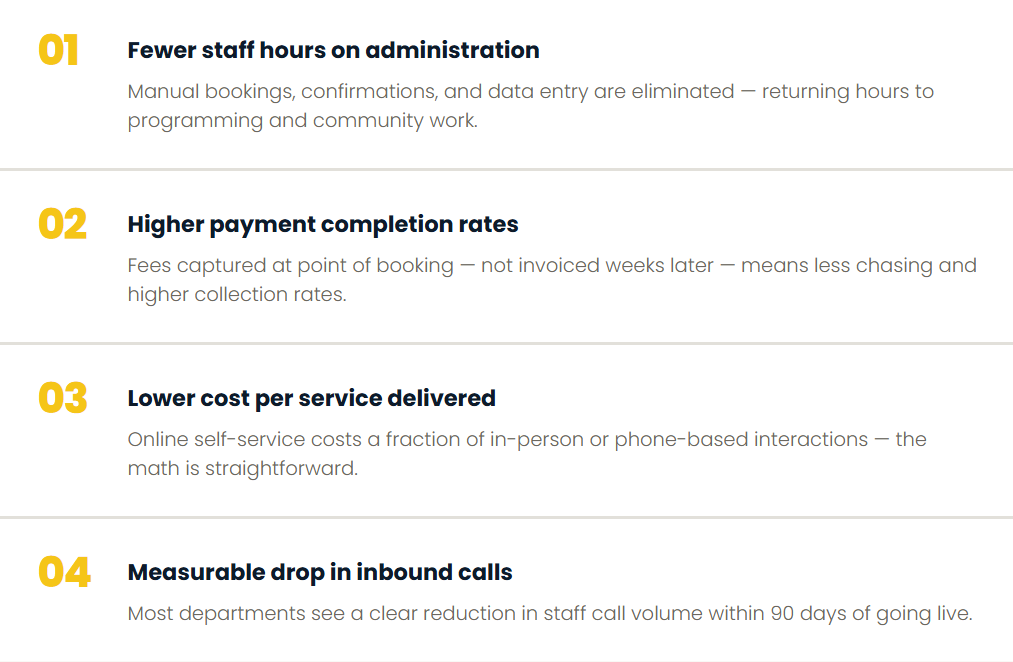
The business case for operational modernization has never been more straightforward. Organizations using integrated facility and program management software typically see faster payment collection since fees are captured at the point of booking rather than invoiced after the fact. For departments running hundreds of transactions per year, that timing difference is significant in real dollar terms.
What This Means for FY2026
Your residents are ready for better. Your staff deserve better tools. And your leadership needs a budget case with specific operational metrics, not just a vision.
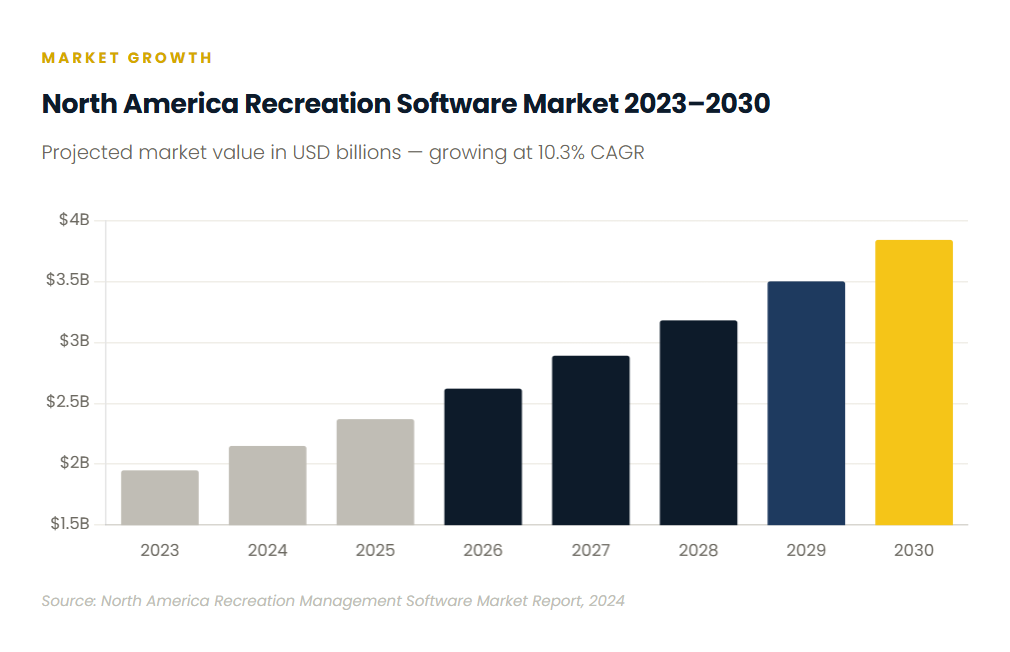
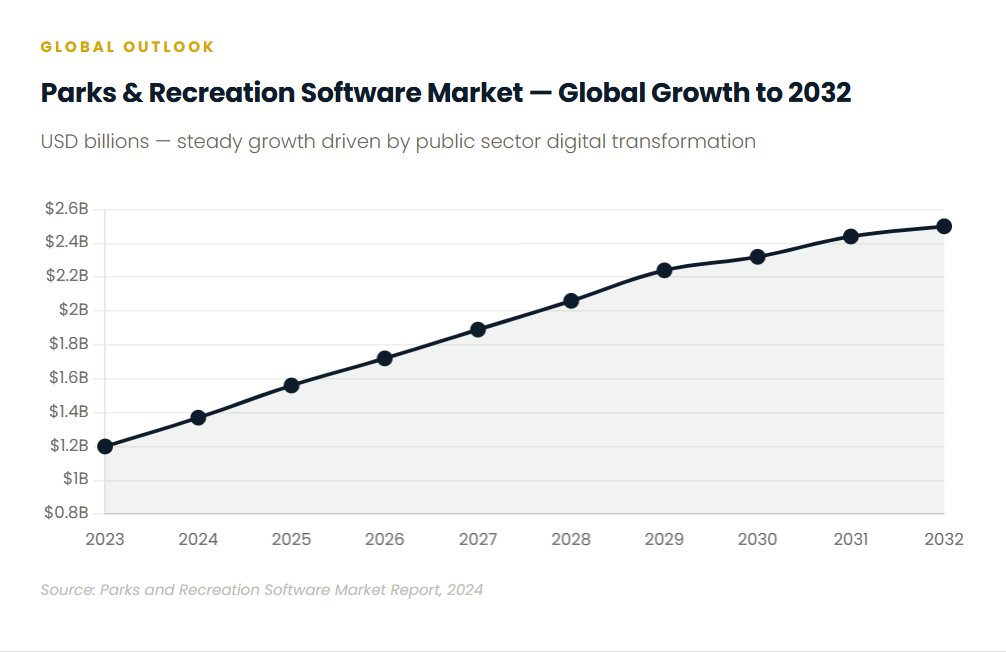
The global Parks and Recreation Software Market is projected to nearly double by 2032. The shift isn’t coming – it’s here. The question for every municipal leader is whether your department is in front of it or catching up.

Make the Shift for 2026 with OptimoGov – North America | OptimoGov

Shantha Ruban is the founder of OptimoGov and the Group CEO of Programus Ltd, the software group behind OptimoGov’s council booking and venue/event management platform. With 30+ years in software R&D, he has led the development of technology solutions for large venues and events.